
What’s the Difference Between Striped and Grid ESD Fabric for Anti-Static Workwear?

Updated: Jan 15
When choosing workwear for electrostatic control environments, the type of ESD fabric you select matters more than most people realize. Two of the most common designs for anti-static clothing materials are striped and grid fabric patterns. Even though they may seem like small differences on the surface, how these fabrics are made and how they perform can significantly impact safety, comfort, and compliance in your workplace.
In this article, we’ll explain in simple, practical terms what sets striped and grid ESD fabrics apart. Whether you are looking for reliable esd fabric suppliers or researching materials for cleanroom garments, this guide will help you make a smarter decision.
What Is ESD Fabric, and Why Does It Matter?
Before diving into differences, it’s worth briefly explaining what ESD fabric actually is. ESD (electrostatic discharge) fabric is engineered to control static electricity — the invisible electrical charge that builds up on clothing and skin. In many industries, from electronics assembly to pharmaceuticals and aerospace, uncontrolled static can damage sensitive components or attract contaminants. ESD fabrics help safely dissipate these charges, protecting both workers and products.
The magic lies in integrating conductive fibers — usually carbon or metal-coated filaments — into the fabric weave. These fibers create pathways that allow static charges to flow away from the body and into grounding systems. Whether in a lab coat, coverall, or cleanroom suit, the effectiveness of this static control depends on how the conductive elements are arranged.
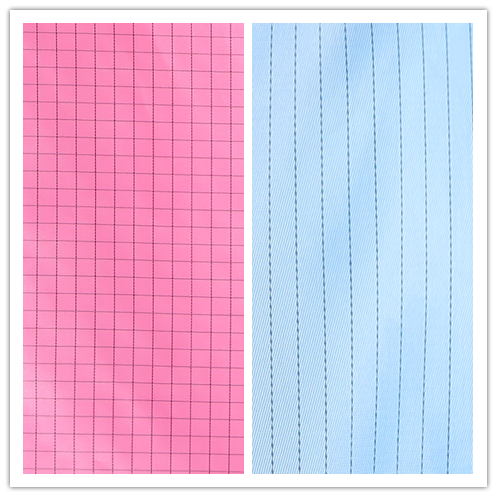
Striped ESD Fabric: Simple, Effective, and Cost-Friendly
Striped ESD fabrics embed conductive threads in parallel lines, usually at regular intervals. These lines look like faint stripes running across the surface of the cloth. They are easy to spot and easier to manufacture than grid patterns, which makes striped ESD fabrics a common choice for basic anti-static workwear.
Key Features of Striped Fabric
Weaving method: Conductive yarns are woven in straight lines.
Performance: It provides a good level of static dissipation, suitable for many industrial environments.
Workshop use: Striped ESD fabric is often used in areas like Class 1000 or Class 10,000 cleanrooms.
Cost: Typically, striped fabric costs less than grid fabric, making it a budget-friendly choice.
Pros and Cons at a Glance
Pros
Lower cost
Simple to produce
Adequate static control in standard workspaces
Cons
Not ideal for extremely sensitive environments
Static dissipation is less uniform than grid patterns
In settings where strict electrostatic standards aren’t required, striped fabric is a practical option — solid protection without high price tags.
Grid ESD Fabric: Higher Precision for High-End Static Control
Grid ESD fabrics, on the other hand, weave their conductive fibers in a network pattern — both horizontally and vertically. The result resembles a tiny mesh or checkerboard rather than straight lines. This design covers the entire fabric surface with conductive pathways, improving its ability to manage static charge.
Key Features of Grid Fabric
Conductive network: Conductive fibers form a full grid, enhancing electrical pathways.
Performance: Grid patterns provide more consistent and reliable static dissipation across the garment.
Workshop use: Best suited for environments where static sensitivity is high, such as Class 100 or semiconductor cleanrooms.
Price: The added complexity in weaving makes grid ESD fabric more expensive than striped alternatives.
Pros and Cons at a Glance
Pros
Superior static dissipation
Greater protection for sensitive equipment
Better performance for high-tech cleanrooms
Cons
Higher cost due to more complex manufacturing
Slightly heavier or stiffer texture (depending on fiber content)
If your work environment demands the highest standards of ESD control, grid-patterned fabric is worth the investment.
Choosing Between Striped and Grid ESD Fabric
So how do you decide which fabric suits your needs?
1. Know your cleanroom classificationLower-to-mid-grade cleanrooms (e.g., Class 1000–10,000) often function very well with striped ESD fabric. But if you’re operating where Class 100 or better compliance is required, grid patterns deliver more reliable performance.
2. Consider your industry needsEnvironments with fragile electronics, optics, or semiconductor processes benefit from grid fabrics. Striped options work well in manufacturing plants, general assembly, and standard labs.
3. Match comfort with performanceGrid fabrics can feel denser, but they give better charge control. Striped fabrics are lighter and more breathable, which might be appreciated for long shifts or warmer environments.
Final Thoughts
Both striped and grid versions of esd fabric serve important roles in anti-static workwear. Choosing between them comes down to your specific application, budget, and static control requirements. When sourcing materials, reliable esd fabric suppliers can help you compare technical specs like surface resistance, weave density, and certifications.
Why Choose JSJM for Your ESD Workwear Needs?
At JSJM, we specialize in premium ESD workwear with a wide range of fabric options — from classic striped anti-static material to grid-pattern fabrics. Our collections include coats, coveralls, suits, smocks, and more, all made with durable anti-static fibers that meet strict industry standards.
Whether you need cost-effective solutions or high-precision protection, JSJM has the esd fabrics and garment styles you’re looking for.