The Complete Guide to ESD Clothing: Materials, Applications, Selection Tips, and Maintenance

Electrostatic discharge (ESD) is an invisible hazard that can damage sensitive electronic components, contaminate cleanroom environments, and even create safety risks in industries handling flammable materials. That's why ESD clothing, also known as antistatic clothing, has become an essential part of workplace protection across many industries.
Modern ESD garments do much more than dissipate static electricity. They also help reduce particle contamination, improve cleanroom hygiene, and provide long-term comfort for employees working in controlled environments.
If you're planning to purchase ESD clothing for your facility, understanding the materials, applications, construction, and maintenance requirements will help you choose garments that deliver reliable performance while reducing long-term operating costs.

ESD clothing is specially designed workwear made with conductive fibers woven into the fabric. These conductive fibers safely dissipate static electricity generated by human movement before it can damage sensitive products or attract airborne particles.
Unlike ordinary work uniforms, ESD garments are engineered to maintain a stable electrostatic resistance while providing excellent durability, comfort, and cleanliness.
They are commonly used in cleanrooms, manufacturing facilities, laboratories, and other environments where contamination control and static protection are critical.
Common Materials Used in ESD Clothing
The performance of an ESD garment begins with the fabric. Different materials provide different levels of protection depending on the application.
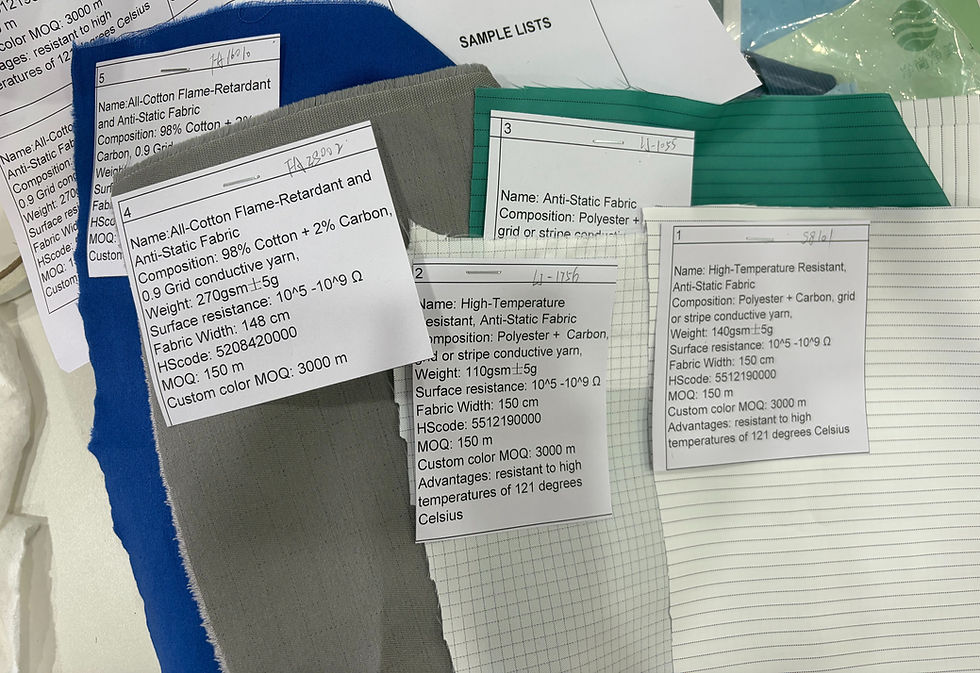
Polyester with Carbon Fiber
This is the most widely used material for reusable cleanroom garments.
Conductive carbon fibers are woven into high-quality polyester fabric to create a lightweight material with excellent static dissipation.
Key benefits include:
Stable ESD performance
Lightweight and comfortable
Low particle shedding
Excellent durability
Suitable for repeated industrial laundering
Ideal for cleanroom environments
Many pharmaceutical and semiconductor manufacturers prefer this type of fabric because it combines cleanliness with reliable electrostatic protection.
Polyester/Cotton Conductive Fabric
Polyester and cotton blends offer better moisture absorption and wearing comfort while maintaining antistatic properties.
These fabrics are often selected for industrial production environments where comfort is important but strict cleanroom requirements are not as demanding.

Stripe and Grid Conductive Fabrics
ESD fabrics generally use two conductive yarn patterns.
Stripe fabrics are economical and suitable for electronics assembly, warehouses, and general industrial applications.

Grid fabrics provide more uniform electrostatic dissipation and better contamination control, making them a preferred choice for pharmaceutical manufacturing, semiconductor production, biotechnology laboratories, and other high-grade cleanrooms.

Industries That Require ESD Clothing
Static electricity affects far more than electronics manufacturing. Today, many industries rely on ESD clothing to protect products, equipment, and personnel.
Electronics Manufacturing
Electronic components such as PCBs, integrated circuits, and sensors are extremely sensitive to electrostatic discharge. Proper ESD garments help prevent costly product failures during assembly and testing.
Semiconductor manufacturing requires strict contamination control and reliable static protection. Cleanroom ESD clothing helps minimize particle generation while protecting delicate wafers and microchips.
Pharmaceutical production follows strict GMP requirements. Cleanroom ESD garments reduce particle contamination while maintaining a hygienic manufacturing environment for medicines, vaccines, and sterile products.
In chemical processing facilities, static electricity can ignite flammable gases, vapors, or fine powders. Antistatic clothing helps reduce this risk and improves workplace safety.
Aircraft electronics, navigation systems, and precision components require careful protection from electrostatic discharge during manufacturing and maintenance.
Medical Device Manufacturing
Medical devices must be produced in controlled environments with high cleanliness standards. ESD clothing supports both contamination control and product quality.
Food Processing Industry
Modern food manufacturing, especially powder handling and automated packaging, benefits from antistatic garments. Low particle shedding fabrics help reduce contamination while minimizing static buildup during production.
Battery Manufacturing
Lithium battery production involves sensitive electronic materials and precision assembly. Stable ESD protection helps improve production quality and reduce defects.
How to Choose the Right ESD Clothing
Not all ESD garments provide the same level of protection. The procurement team should evaluate several important factors before making a purchasing decision.
Choose the Right Fabric
The fabric should match your industry's cleanliness requirements. Polyester with conductive carbon fibers is typically recommended for cleanrooms, while polyester/cotton blends are suitable for general industrial applications.
Check Electrostatic Performance
Always verify that the garment provides stable surface resistance within the required ESD range and complies with applicable industry standards.
Look for Low Particle Shedding
For cleanroom applications, fabrics should release as few fibers and particles as possible. Low-lint materials help maintain a cleaner working environment and reduce contamination risks.
Ensure Performance After Repeated Washing
High-quality ESD clothing should maintain its antistatic performance even after dozens of industrial washing cycles. Inferior garments may lose conductivity over time, resulting in reduced protection and higher replacement costs.
Prioritize Comfort
Employees often wear ESD garments for long shifts. Lightweight fabrics, ergonomic designs, adjustable cuffs, and flexible sizing all contribute to better comfort and productivity.
Consider Garment Design
Depending on the application, you may need lab coats, jackets, trousers, coveralls, hoods, or integrated cleanroom suits. Selecting the right style improves both protection and operational efficiency.
How to Maintain ESD Clothing
Proper maintenance helps extend garment life while preserving electrostatic performance.
Follow these simple practices:
Wash garments according to the manufacturer's recommendations.
Avoid bleach and harsh chemicals that may damage conductive fibers.
Do not use fabric softeners, as they can reduce antistatic performance.
Inspect garments regularly for damaged seams, worn conductive yarns, or broken zippers.
Store garments in clean, dry environments to prevent contamination.
Replace garments when they no longer meet cleanliness or ESD performance requirements.
Routine inspection and proper laundering not only protect your investment but also ensure consistent workplace safety.
Final Thoughts
Choosing the right ESD clothing is about much more than selecting a comfortable uniform. The right garments help protect sensitive products, reduce contamination, improve workplace safety, and support compliance with industry standards.
Whether you operate in electronics, semiconductors, pharmaceuticals, chemicals, aerospace, medical devices, or food processing, investing in high-quality reusable ESD garments can improve both production efficiency and product quality. By selecting durable fabrics with low particle shedding and stable electrostatic performance after repeated washing, businesses can achieve better long-term value while maintaining reliable protection.
Looking for Reliable ESD Clothing?
JSJM specializes in manufacturing high-quality ESD clothing, cleanroom garments, and antistatic workwear for pharmaceutical, electronics, semiconductor, biotechnology, food processing, and other controlled environments.
Why Choose JSJM?
Free Sample Available
OEM & ODM Manufacturing
Low Particle Shedding Fabrics
Stable ESD Performance
Reusable After Repeated Industrial Washing
Custom Sizes, Colors, and Logo Printing
Fast Global Shipping
Contact JSJM today to discuss your cleanroom or ESD clothing requirements. Our experienced team is ready to recommend the best solution for your application and help you build a safer, cleaner, and more efficient workplace.